

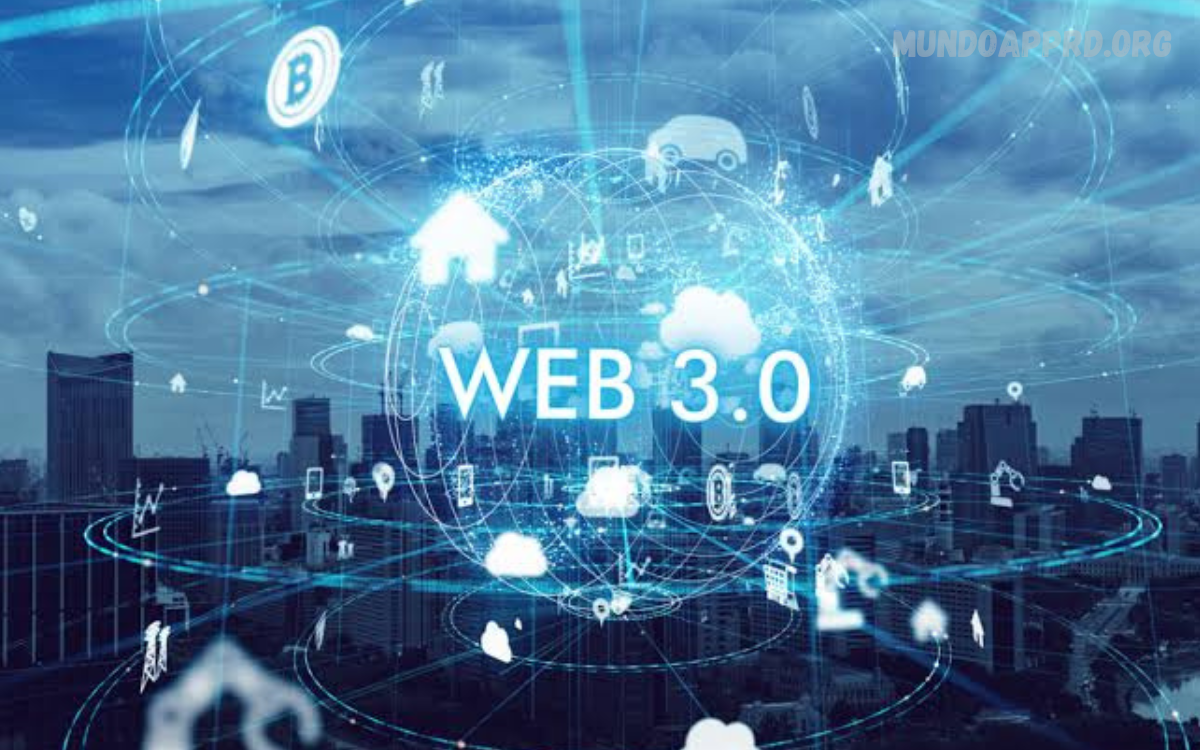
The internet is entering another important stage of development, and the Future of Web 3.0 Technology is becoming a major topic for businesses, developers, creators, and everyday users. Web 3.0 represents a vision of a more decentralized, intelligent, secure, and user-focused internet where people can have greater control over their digital identities, information, and assets.
Unlike the traditional web, which often depends on centralized platforms and large technology companies, Web 3.0 aims to distribute control through technologies such as blockchain, artificial intelligence, decentralized applications, smart contracts, digital identity systems, and decentralized storage. These technologies could change how people communicate, work, shop, create content, and manage digital assets.
What Is Web 3.0 Technology?
Web 3.0 is commonly described as the next evolution of the internet. Web 1.0 was largely focused on reading information, while Web 2.0 introduced highly interactive platforms where users could create, share, and communicate. Web 3.0 adds greater emphasis on decentralization, ownership, privacy, intelligent services, and direct digital interactions.
The goal is not simply to create another version of websites. Instead, Web 3.0 seeks to change the underlying way digital information and online relationships are managed. Blockchain can support decentralized records, while artificial intelligence can make digital services more intelligent and personalized.
Decentralization Will Shape the Future
One of the strongest characteristics of Web 3.0 is decentralization. Traditional online services commonly store information on centralized servers controlled by individual companies, while decentralized networks distribute information and responsibilities across multiple participants.
This approach could reduce dependence on a single organization and provide greater resilience. Users may gain more control over their digital information, while decentralized applications can operate through distributed infrastructure rather than relying entirely on one central authority.
Blockchain and Web 3.0
Blockchain technology is expected to remain an important foundation of Web 3.0. It provides a method for recording transactions and digital ownership across distributed networks, helping participants interact without always requiring a traditional intermediary.
Smart contracts can further expand blockchain’s usefulness by automatically executing predefined conditions. In the future, these systems could support financial services, digital marketplaces, supply chains, identity management, gaming ecosystems, and many other applications.
Artificial Intelligence and Web 3.0
Artificial intelligence will play a major role in making Web 3.0 more intelligent and accessible. AI can analyze information, understand user preferences, automate tasks, improve search experiences, and help applications respond more naturally to individual needs.
The combination of AI and decentralized technology could also create new forms of intelligent digital services. AI agents may eventually perform tasks across decentralized applications, while blockchain-based systems could provide records for ownership, transactions, permissions, and interactions.
Digital Identity and User Ownership
Digital identity is another important part of The Future of Web 3.0 Technology. Instead of creating separate accounts for each platform, users could maintain portable digital identities that work across services.
Decentralized identity systems may allow people to control how their credentials and personal information are shared. This could reduce unnecessary data collection and make online authentication more flexible while giving users greater authority over their digital presence.
The Growth of Decentralized Applications
Decentralized applications, commonly called dApps, are expected to become increasingly important as Web 3.0 develops. These applications can use blockchain networks and smart contracts to provide services without depending completely on traditional centralized infrastructure.
Future dApps could become easier to use and more closely resemble the applications people already know. Better interfaces, faster networks, improved scalability, and simpler authentication will be essential if decentralized applications are to reach mainstream audiences.
Web 3.0 and Digital Ownership
Digital ownership is one of the most significant concepts associated with Web 3.0. Traditional digital platforms often determine how users can access, transfer, or monetize digital content, whereas decentralized systems can introduce programmable mechanisms for ownership and transfer.
Digital assets can represent items such as memberships, certificates, collectibles, virtual goods, or other forms of value. As technology develops, digital ownership could become increasingly connected with gaming, entertainment, education, commerce, and professional services.
Privacy and Data Security
Privacy is expected to remain a major reason for interest in Web 3.0. Centralized platforms can create large collections of user information, making them attractive targets for cyberattacks and unauthorized data use.
Web 3.0 technologies may provide alternative approaches to data management through decentralized identity, cryptography, distributed storage, and privacy-preserving systems. However, decentralization does not automatically guarantee security, so strong technical design and responsible implementation will remain essential.
Read Also: Free Fire Latest Update: New Features, Changes & Improvements
Web 3.0 in Business
Businesses are already exploring ways decentralized technologies can improve operations and customer relationships. Blockchain can provide transparent records, while smart contracts can automate agreements and transactions between organizations.
In the future, companies may use Web 3.0 technologies for supply-chain tracking, digital credentials, customer loyalty programs, payments, intellectual property management, and decentralized marketplaces. Organizations that understand these technologies early may be better positioned to adapt to changing digital expectations.
Web 3.0 and the Financial Industry
Finance is one of the areas where Web 3.0 can have a particularly significant impact. Decentralized finance can provide financial services through blockchain-based protocols, potentially reducing the need for traditional intermediaries in certain activities.
Future developments could improve transaction speed, accessibility, transparency, and automation. Nevertheless, financial applications must address security, regulatory requirements, consumer protection, volatility, and technical risks before they can be suitable for widespread everyday use.
Web 3.0 and the Metaverse
Web 3.0 and the metaverse are separate concepts, but they can complement each other. Web 3.0 can provide decentralized ownership, identity, payments, and digital asset infrastructure, while immersive technologies can create interactive virtual environments.
As virtual and augmented reality technologies improve, users may participate in digital spaces where assets and identities can move between compatible platforms. Interoperability will be particularly important for creating meaningful and connected virtual experiences.
The Role of IoT and Edge Computing
The Internet of Things can contribute to the development of Web 3.0 by connecting physical devices with decentralized digital systems. Smart devices could exchange information and interact with automated services without relying entirely on centralized infrastructure.
Edge computing can also help by processing information closer to where it is generated. Combining edge computing with AI, IoT, and decentralized networks could reduce latency and support faster responses for applications involving connected vehicles, smart cities, industrial systems, and intelligent devices.
Web 3.0 and Content Creation
Content creators could experience major changes as decentralized platforms develop. Web 3.0 may provide creators with alternative methods to distribute content, establish ownership, interact directly with audiences, and receive payments.
This could create new economic models that reduce dependence on advertising-driven platforms. Creators may have more control over their communities and digital assets, although successful adoption will depend on user experience, sustainable business models, and reliable infrastructure.
Challenges Facing Web 3.0
Despite its potential, Web 3.0 faces several serious challenges. Scalability, transaction costs, interoperability, cybersecurity, regulatory uncertainty, energy efficiency, and technical complexity can make decentralized systems difficult for ordinary users to adopt.
Another major challenge is usability. Many Web 3.0 products still require users to understand wallets, private keys, networks, tokens, and other technical concepts. Future platforms will need to hide much of this complexity behind simple interfaces if Web 3.0 is going to achieve mainstream adoption.
Security Will Remain Essential
Security will be one of the most important priorities for the future of Web 3.0. Decentralized systems introduce distinct security models, and errors involving private keys, smart contracts, wallets, or decentralized applications can pose significant risks.
Developers will need stronger testing, auditing, authentication, privacy protection, and recovery mechanisms. Users will also need better education so that decentralized ownership does not become a source of unnecessary security problems.
Interoperability Will Drive Adoption
For Web 3.0 to reach its full potential, different networks and applications will need to communicate effectively. Users are unlikely to adopt an ecosystem where digital identities, assets, and information remain isolated across incompatible platforms.
Improved interoperability could allow users to move between services more easily while maintaining appropriate control over their identities and assets. Open standards and common protocols will therefore be important in building a connected Web 3.0 environment.
The Future of Web 3.0 Technology
The future of Web 3.0 Technology will likely involve a gradual combination of decentralization, artificial intelligence, blockchain, edge computing, IoT, privacy technologies, and intelligent applications. Rather than replacing the current internet overnight, Web 3.0 is more likely to develop alongside existing systems.
Future users may not even notice when they are interacting with Web 3.0 infrastructure. Wallets, decentralized identity, smart contracts, and blockchain systems could become hidden behind familiar interfaces. The most successful technologies will likely be those that provide practical benefits without forcing users to understand complicated technical processes.
Web 3.0 Adoption in Everyday Life
As the technology matures, Web 3.0 could become part of everyday activities such as payments, online authentication, entertainment, gaming, education, shopping, and professional collaboration. Users may benefit from more portable identities and greater control over digital assets.
The biggest transformation could be the relationship between users and online platforms. Instead of simply participating in services controlled by centralized organizations, users may increasingly become owners, contributors, and active participants in digital ecosystems.
What Businesses Should Expect?
Businesses should view Web 3.0 as a long-term technological development rather than a short-term trend. Companies can begin by studying decentralized technologies, identifying practical use cases, improving cybersecurity knowledge, and monitoring developments in regulation and interoperability.
Organizations should also focus on solving real customer problems rather than adopting blockchain or Web 3.0 technologies solely for marketing purposes. Successful implementation will depend on measurable benefits, reliable infrastructure, user trust, and a strong understanding of the technology.
Frequently Asked Questions
What is Web 3.0 Technology?
Web 3.0 Technology refers to a vision for a more decentralized, intelligent, secure, and user-centered internet. It commonly involves blockchain, artificial intelligence, decentralized applications, digital identity, smart contracts, and distributed infrastructure.
Why is Web 3.0 important?
Web 3.0 is important because it aims to give users greater control over digital identities, information, and assets. It also explores alternatives to highly centralized online platforms.
Is blockchain necessary for Web 3.0?
Blockchain is an important technology associated with many Web 3.0 systems, particularly those involving decentralized ownership and transactions. However, Web 3.0 is broader than blockchain and can involve AI, semantic technologies, IoT, edge computing, and other technologies.
How will AI affect Web 3.0?
AI can make Web 3.0 applications more intelligent, personalized, and automated. AI agents may eventually interact with decentralized services and perform tasks on behalf of users.
Will Web 3.0 replace Web 2.0?
A complete replacement is unlikely to happen quickly. Web 3.0 technologies are more likely to develop alongside existing Web 2.0 services and gradually introduce decentralized features where they provide practical advantages.
Is Web 3.0 secure?
Web 3.0 can provide strong security mechanisms, but decentralization does not automatically make a system secure. Smart-contract vulnerabilities, stolen credentials, phishing, software flaws, and poor implementation can still create serious risks.
What industries can benefit from Web 3.0?
Finance, gaming, entertainment, supply chains, healthcare technology, education, digital identity, commerce, and content creation are among the areas that could benefit from decentralized technologies.
What are the biggest Web 3.0 challenges?
Major challenges include scalability, usability, interoperability, security, privacy, regulation, infrastructure costs, and the complexity of decentralized systems.
Will Web 3.0 improve online privacy?
Web 3.0 has the potential to improve privacy through decentralized identity, cryptography, and alternative data-management approaches. However, privacy depends on how individual systems are designed and implemented.
What is the future of Web 3.0 Technology?
The future of Web 3.0 Technology is likely to involve deeper integration between blockchain, AI, decentralized identity, IoT, edge computing, and privacy technologies. Its long-term success will depend on usability, security, scalability, interoperability, and real-world value.
Conclusion
The Future of Web 3.0 Technology represents a significant shift in how people may interact with the internet. Its emphasis on decentralization, digital ownership, privacy, intelligent services, and user control could influence many areas of the digital economy.
Web 3.0 is still developing, and significant challenges remain before its broader vision can become mainstream.

1 Comment
Pingback: Metaverse Updates and Emerging Trends in 2026 - MundoAppRD