

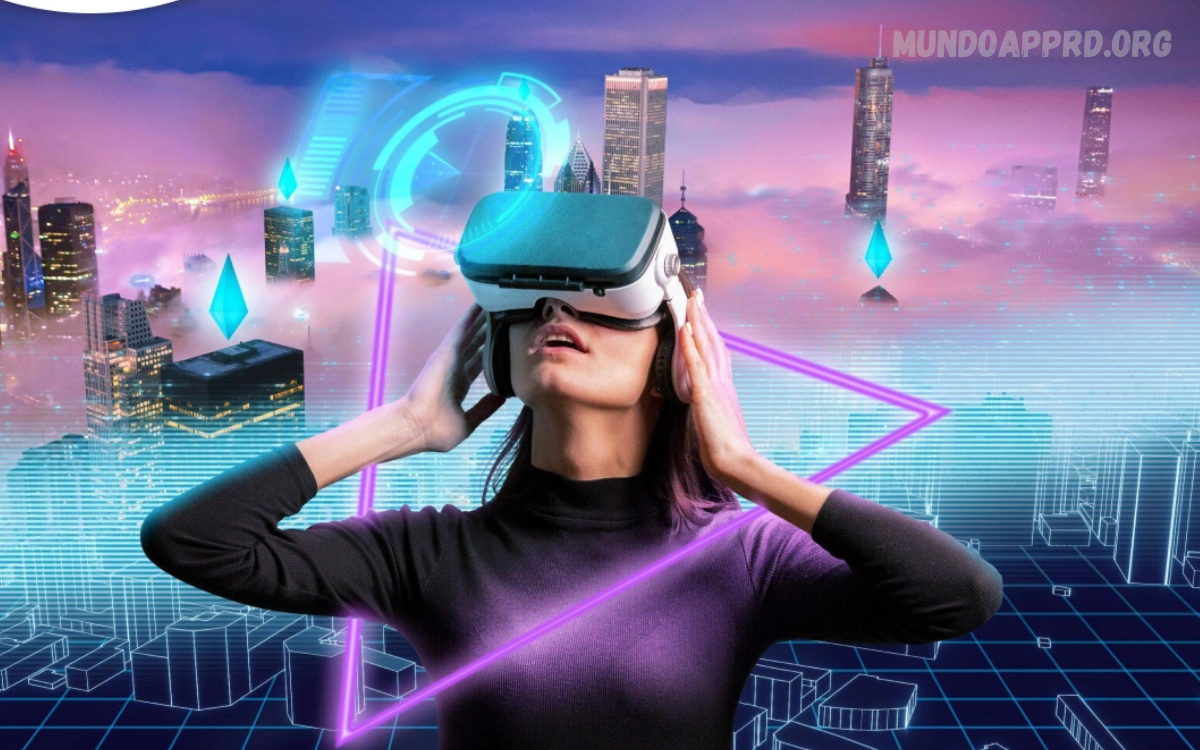
The metaverse is entering a more practical and technology-focused phase in 2026. Instead of being defined mainly by virtual reality headsets and digital avatars, today’s metaverse is increasingly connected with artificial intelligence, spatial computing, extended reality, digital twins, intelligent virtual agents, and immersive collaboration.
The latest Metaverse Updates and Emerging Trends in 2026 show that the industry is moving away from hype and toward useful applications. Businesses, educators, developers, cities, and consumers are exploring virtual environments for training, communication, entertainment, design, customer experiences, and digital services.
The Metaverse Is Becoming More Practical
One of the biggest Metaverse Updates and Emerging Trends in 2026 is the industry’s movement toward practical applications. Companies are increasingly interested in immersive tools that solve specific problems, such as employee training, product visualization, remote collaboration, education, and simulation, rather than creating virtual spaces simply because the technology is available.
This practical approach is helping the metaverse become more useful and sustainable. Instead of expecting users to spend entire days inside a virtual world, developers are creating experiences that add value to real-world activities. The result is a broader definition of the metaverse that includes virtual reality, augmented reality, mixed reality, digital twins, spatial interfaces, and other technologies that connect digital information with physical environments.
Artificial Intelligence Is Transforming Virtual Worlds
Artificial intelligence is arguably the most influential technology shaping the metaverse in 2026. AI can help generate environments, characters, objects, conversations, recommendations, animations, and interactive experiences. Recent research highlights AI’s role in intelligent avatars, virtual content creation, personalization, perception, interaction, and scalable computing.
Generative AI is also helping address one of the longstanding problems of virtual worlds: creating enough high-quality content. Traditional 3D development can require significant time, technical expertise, and resources. Generative systems can assist developers by producing assets, environments, dialogue, and interactive elements more quickly, potentially allowing smaller teams to build richer experiences. Research published in 2026 specifically examines how generative AI can make virtual worlds more dynamic through intelligent non-player characters and automatically generated content.
AI-Powered Avatars and Virtual Agents
Avatars are evolving from simple visual representations into more intelligent digital characters. In 2026, AI-powered avatars can potentially understand natural-language instructions, remember contextual information, respond dynamically, and participate in virtual activities. This creates more engaging social, educational, entertainment, and commercial experiences.
Another emerging development is the rise of agentic AI inside virtual environments. Recent research proposes agentic metaverse services in which AI agents can perceive information, make decisions, perform tasks, collaborate, and generate content. This could eventually turn virtual assistants into active participants capable of completing multi-step activities rather than simply responding to questions.
Spatial Computing Takes Center Stage
Spatial computing is becoming a major foundation of the modern metaverse. Rather than treating digital content as something that exists only inside a screen, spatial computing allows computers to understand physical environments and place digital information within them. This approach connects cameras, sensors, mapping technologies, displays, and AI to create more natural interactions between people and digital objects.
Industry discussions in 2026 increasingly emphasize practical spatial computing rather than technology demonstrations. At AWE 2026, the focus was strongly on combining spatial computing with AI to create contextual experiences that understand the user’s surroundings and intentions. This development could make immersive technology more useful in workplaces, homes, education, retail, healthcare, and entertainment.
Smart Glasses and Lightweight XR Devices
Headsets remain important, but lightweight glasses are becoming increasingly significant in the broader metaverse ecosystem. Smart glasses can provide information, navigation, translation, communication, visual assistance, and other digital services without requiring users to isolate themselves from their surroundings.
The 2026 XR market is increasingly focused on making spatial technology feel natural and convenient. Current smart-glasses categories include AI audio glasses, display-enabled glasses, virtual-screen glasses, and other extended-reality devices. As hardware becomes lighter and AI processing becomes more efficient, wearable devices could become an important gateway to future metaverse experiences.
Generative 3D Worlds Are Emerging
Another important trend is the development of AI systems capable of generating three-dimensional environments. Instead of manually constructing every building, landscape, object, and scene, developers can increasingly use AI-assisted tools to accelerate world creation.
Research into interactive world models in 2026 is exploring systems that generate explorable, continuously evolving environments from inputs such as text, images, or video. These systems aim to maintain spatial and temporal consistency while allowing users to interact with generated worlds. If these technologies continue improving, virtual-world development could become faster, more flexible, and accessible to a much wider range of creators.
Digital Twins and the Citiverse
Digital twins are another major component of the evolving metaverse. A digital twin creates a digital representation of a physical object, building, factory, infrastructure system, or environment. Organizations can use these models to monitor conditions, test scenarios, optimize operations, and understand complex systems.
The concept is expanding beyond individual facilities toward entire cities. The International Telecommunication Union’s 2026 Global Initiative on AI and Virtual Worlds focuses on the convergence of AI, spatial intelligence, and digital twins through the emerging concept of the citiverse. The initiative aims to support public services, economic development, digital trust, and open and interoperable ecosystems.
Metaverse Applications in Business
Businesses are becoming more selective about metaverse investments. Rather than focusing only on virtual stores or promotional environments, organizations are exploring applications that can provide measurable operational benefits. Virtual training, design visualization, collaborative engineering, customer demonstrations, simulations, and remote assistance are examples of areas where immersive technology can deliver practical value.
For employees, virtual environments can provide realistic training without exposing workers to real-world risks. Manufacturers can simulate production processes, architects can explore digital buildings, and organizations can conduct collaborative meetings in shared three-dimensional environments. These applications demonstrate why the future metaverse may develop more strongly through enterprise use than through entertainment alone.
Immersive Education and Training
Education is another area where metaverse technologies can create meaningful experiences. Virtual classrooms can allow students to explore historical locations, scientific environments, laboratories, museums, and complex three-dimensional models. Instead of simply reading about an object, learners can potentially examine and interact with it from different perspectives.
Training can also become more immersive through realistic simulations. Medical students, engineers, technicians, pilots, and other professionals can practice procedures or scenarios in controlled environments. Research reviewing applied metaverse technologies identifies improved training effectiveness, safety, immersive learning, and cost efficiency among potential benefits.
Read Also: The Future of Web 3.0 Technology
The Evolution of Virtual Economies
Virtual economies remain an important part of metaverse development, but the conversation is becoming more practical. Digital goods, virtual services, creator marketplaces, subscriptions, and in-world commerce can all support economic activity inside virtual environments.
Blockchain and digital ownership may continue to play a role, particularly where users need verifiable ownership or transferable digital assets. However, the future of virtual economies will likely depend less on speculation and more on whether digital assets provide genuine utility. Sustainable ecosystems need useful products, active communities, secure transactions, and clear consumer protections.
Interoperability and Open Virtual Worlds
Interoperability remains one of the most challenging goals for the metaverse. Users generally want digital identities, content, and experiences to work across different platforms, but technical standards, business models, security requirements, and competing ecosystems make this difficult.
In 2026, the emphasis on open and interoperable ecosystems is becoming stronger. Organizations and standards groups are exploring ways to improve compatibility between spatial environments and digital services. Greater interoperability could reduce platform restrictions and make virtual experiences more connected, although achieving a fully seamless cross-platform metaverse remains a long-term challenge.
Privacy, Security, and Digital Trust
As metaverse platforms collect more spatial, behavioral, biometric, and interaction data, privacy becomes increasingly important. Immersive systems can potentially understand where users look, how they move, what they interact with, and how they communicate. Protecting this information will be essential for long-term adoption.
Security is equally important because virtual environments can contain valuable accounts, digital assets, personal information, and business data. Developers need strong identity protection, secure authentication, responsible data collection, moderation systems, and transparent privacy policies. Research on AI-enabled metaverse systems also emphasizes privacy, ethical risks, scalability, and trustworthy development as important challenges.
The Role of Web3 and Digital Ownership
Web3 technologies continue to influence discussions around the metaverse, particularly through blockchain-based ownership, decentralized identities, digital assets, and tokenized ecosystems. These technologies can potentially give users greater control over certain digital possessions and transactions.
However, blockchain should not be considered a requirement for every metaverse application. Many useful virtual environments can operate without cryptocurrencies or NFTs. The strongest future projects will likely use decentralized technologies where they solve a specific problem rather than adding unnecessary complexity.
Better User Experiences and Accessibility
The success of the metaverse will depend heavily on user experience. Earlier immersive technologies often faced challenges involving expensive hardware, uncomfortable devices, complicated interfaces, and limited content. These barriers continue to influence adoption.
Future platforms are expected to prioritize comfort, accessibility, intuitive controls, voice interaction, eye tracking, gesture recognition, and AI assistance. Making virtual environments usable for people with different abilities and levels of technical experience will also be important. A more inclusive metaverse can reach broader audiences and create stronger long-term communities.
What the Future Holds for the Metaverse?
The future metaverse is unlikely to look exactly like the fictional virtual worlds often presented in earlier visions. Instead, it is becoming a combination of AI, XR, spatial computing, digital twins, intelligent agents, virtual environments, and connected digital services.
The most important Metaverse Updates and Emerging Trends in 2026 indicate a transition from hype toward usefulness. The technology is still developing, and significant challenges remain around hardware, interoperability, privacy, ethics, scalability, and user adoption. However, continued progress in AI and spatial technologies could increasingly connect virtual and physical experiences.
Frequently Asked Questions
What Is the Metaverse in 2026?
The metaverse in 2026 refers to a broad ecosystem of immersive, interconnected digital experiences that encompass virtual reality, augmented reality, mixed reality, spatial computing, AI, digital twins, and virtual worlds. It is not currently one single universal platform.
What Is the Biggest Metaverse Trend in 2026?
Artificial intelligence is one of the biggest trends because it can support content generation, intelligent avatars, virtual agents, personalization, interaction, and automated world creation. AI is helping make virtual environments more dynamic and useful.
How Is AI Changing the Metaverse?
AI is changing the metaverse by helping generate digital environments, characters, objects, dialogue, and personalized experiences. It can also provide intelligent virtual agents that understand context and complete tasks.
Are VR Headsets Still Important in 2026?
Yes. VR headsets remain important for highly immersive experiences, but the broader ecosystem is expanding toward mixed reality, spatial computing, smart glasses, and other lightweight wearable technologies.
What Are Digital Twins in the Metaverse?
Digital twins are digital representations of physical objects, facilities, systems, or environments. They can be used for monitoring, simulation, training, design, optimization, and planning.
Will the Metaverse Become Mainstream?
Mainstream adoption is possible, but it depends on improvements in hardware affordability, comfort, content quality, interoperability, privacy, and ease of use. The industry is still developing rather than having reached a fully mature stage.
Is Blockchain Still Relevant to the Metaverse?
Blockchain can support digital ownership, decentralized identity, transactions, and virtual economies. However, it is not necessary for every metaverse application, and its usefulness depends on the specific purpose of a platform.
How Will Businesses Use the Metaverse?
Businesses can use immersive environments for employee training, product demonstrations, virtual collaboration, design, simulation, customer engagement, remote assistance, and digital-twin applications.
What Are the Main Challenges Facing the Metaverse?
Major challenges include hardware limitations, high development costs, privacy concerns, cybersecurity, interoperability, social risks, content moderation, accessibility, and the need for sustainable business models.
What Should We Expect From the Metaverse After 2026?
Future development is likely to focus on AI-powered virtual agents, spatial intelligence, realistic digital twins, generative 3D environments, lightweight XR devices, immersive collaboration, and stronger connections between physical and digital spaces.
Conclusion
The Metaverse Updates and Emerging Trends in 2026 demonstrate that the technology is evolving beyond its earlier hype-driven image. Artificial intelligence, spatial computing, smart glasses, generative 3D environments, digital twins, intelligent agents, and immersive applications are shaping a broader, more practical vision of connected digital experiences.
The metaverse is therefore better understood as an evolving technological ecosystem rather than a single virtual destination.
