

Introduction
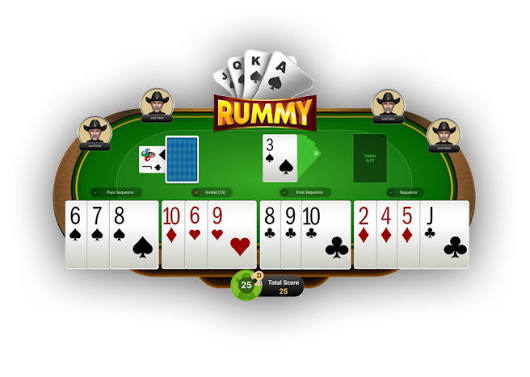
Rummy Game is a widely recognised search term among people interested in traditional card games. Rummy is based on arranging cards into valid combinations, especially sequences and sets. Its different formats provide a variety of rules and playing experiences.
A beginner may initially find the game confusing because of its terminology, joker system and declaration requirements. However, once the fundamentals become clear, understanding the structure becomes much easier.
This guide explains the basic meaning of a rummy game, card combinations, important terminology, common rules and the features of recreational digital versions.
1. What Is a Rummy Game?
A rummy game is a card game in which participants organise their cards into valid groups.
These groups are generally called melds or combinations.
The most familiar combinations are:
- Sequences.
- Pure sequences.
- Impure sequences.
- Sets.
The precise requirements depend on the variation being played.
2. Understanding Card Ranks and Suits
A standard playing-card deck contains four suits:
- Hearts.
- Diamonds.
- Clubs.
- Spades.
Each suit contains numbered cards and face cards.
Understanding suits and ranks is necessary for identifying possible combinations.
For example, 6, 7 and 8 of clubs form a consecutive sequence.
3. What Is a Sequence?
A sequence is a group of consecutive cards belonging to the same suit.
Examples include:
- 2, 3 and 4 of hearts.
- 7, 8 and 9 of diamonds.
- 10, jack and queen of spades.
The applicable rules determine whether particular combinations involving aces and face cards are valid.
4. What Is a Pure Sequence?
A pure sequence is formed without substituting a joker for a missing card.
For example:
4 of hearts, 5 of hearts and 6 of hearts.
This is a basic example of a pure sequence.
Standard thirteen-card Indian Rummy requires at least one pure sequence for a valid declaration.
5. What Is an Impure Sequence?
An impure sequence uses a permitted joker to replace a missing card.
For example, a group containing 5 and 7 of diamonds with a joker representing 6 may form an impure sequence under the applicable rules.
6. What Is a Set?
A set consists of cards with the same rank but different suits.
For example:
- 8 of hearts.
- 8 of clubs.
- 8 of diamonds.
These cards may form a valid set under standard rules.
The number of cards and restrictions should be checked for the specific game variation.
7. How Does a Traditional Rummy Round Work?
In a common rummy format, the round follows a general structure.
Step 1: Card Distribution
Each participant receives the required number of cards.
Step 2: Drawing
A player selects a card from the available closed or open deck.
Step 3: Arranging
Players organise their cards into possible combinations.
Step 4: Discarding
A player places an unwanted card into the discard pile.
Step 5: Declaration
A participant declares when their cards satisfy the applicable requirements.
This is a simplified explanation. Actual procedures vary across rummy formats.
8. Why Are Jokers Important?
Jokers provide flexibility in some rummy variations.
They may help complete combinations where a particular card is missing.
However, their use is governed by specific rules. A joker cannot automatically replace every card in every combination.
9. Common Rummy Terms
| Term | Meaning |
| Sequence | Consecutive cards of one suit |
| Pure sequence | Sequence without a substitute joker |
| Set | Cards of the same rank |
| Joker | Special substitute card |
| Closed deck | Undrawn cards |
| Open deck | Discarded cards |
| Declaration | Claim that the hand is complete |
| Deadwood | Unmatched cards in Gin Rummy |
10. Beginner Learning Tips
Beginners should avoid trying to memorise every variation simultaneously.
Instead, focus on one version at a time.
Learn card ranks, practise identifying sequences, understand sets and study the joker rules.
Use physical cards or lawful non-monetary practice modes to understand the process.
Reading examples is also helpful because examples make abstract rules easier to understand.
11. Digital Rummy Games
Digital rummy experiences may offer card animations, tutorials, scoreboards, game history and multiplayer features.
However, a digital application should be evaluated carefully.
Check:
- Developer identity.
- Official download source.
- Privacy policy.
- Account security.
- Age requirements.
- Customer support.
- Applicable legal classification.
Avoid applications that request unnecessary permissions or advertise guaranteed earnings.
12. Responsible Gaming and Indian Regulations
The Promotion and Regulation of Online Gaming Act, 2025, and the 2026 Rules are important when discussing digital rummy in India.
The central law prohibits online money games and related advertising and financial transactions. The Rules became effective on 1 May 2026.
Press Information Bureau+1
Therefore, readers should distinguish ordinary recreational card games from prohibited online money gaming services.
13. Frequently Asked Questions
Q1. What is the objective of a rummy game?
The objective in many variations is to organise cards into valid combinations according to the game’s rules.
Q2. What is a pure sequence?
It is a consecutive sequence of the same suit without a joker replacing a card.
Q3. What is a joker used for?
A joker may substitute for a missing card in eligible combinations.
Q4. Is every rummy game played with thirteen cards?
No. Different variations use different card counts.
Q5. Can beginners learn rummy?
Yes. Starting with basic sequences and sets makes the learning process easier.
Conclusion
Rummy Game is an interesting card-game category with several variations and different playing structures. Learning sequences, sets, jokers and declarations provides a strong foundation. Beginners should take time to understand the rules, evaluate digital platforms carefully and choose lawful recreational entertainment without prohibited financial stakes.
