

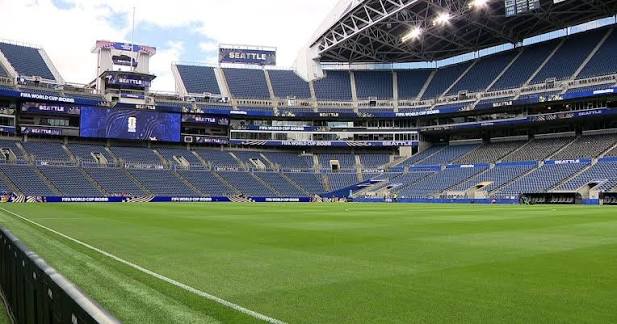
Seattle’s reputation as one of the loudest football cities in North America will be tested on a global stage when World Cup 2026 arrives at Lumen Field, rebranded as Seattle Stadium for the tournament. With six matches scheduled in a steep, noise‑trapping bowl that has already become iconic in MLS and the NFL, the city’s atmosphere will do more than sound impressive on TV—it will subtly change how teams press, defend and build attacks whenever you tune in.
Why Seattle’s Stadium And Crowd Matter For Tactical Football
Seattle Stadium sits just blocks from the Puget Sound waterfront and has long been known for a matchday experience where sound from the stands cascades back onto the pitch rather than escaping into the sky. For World Cup 2026, the venue will host six games, meaning multiple teams will experience not just a new surface but a unique acoustic environment that can amplify every press, tackle and counter‑attack in ways you can feel even through a broadcast. For viewers, understanding that context helps explain why some sides seem to feed off the noise and grow into matches in Seattle while others retreat into deeper blocks more quickly than they might in quieter stadiums.
From Turf Fortress To Natural Grass: How The New Surface Changes Play
For decades, Lumen Field was synonymous with high‑quality artificial turf, underpinning both the Seattle Seahawks and the Sounders’ home advantage. In preparation for the World Cup, the stadium has undergone one of the most significant changes in its history: installing a FIFA‑approved natural‑grass pitch over the existing turf base, using layered sub‑structures and a hybrid surface grown at a specialist farm in Moses Lake to balance durability with true ball behaviour. For live viewers, that shift means ground passes should roll more predictably, first touches in tight spaces should better reflect technical quality rather than turf bounce, and sliding challenges or last‑ditch blocks will play out more like those you see in traditional football cathedrals than on synthetic surfaces.
Climate And Kickoff Time: Why Seattle Offers A Different Physical Test
Compared with venues in Texas or Florida, early forecasts suggest Seattle’s World Cup matches will generally be played in milder temperatures, often in the low to mid‑70s Fahrenheit with RealFeel readings in the low 80s by full‑time. That still counts as a meaningful physical test, especially on rare record‑breaking days, but it is a very different challenge from the wet‑heat of Miami or the thin air of Mexico City; here, players are more likely to feel the accumulative effect of intensity and travel than acute heat stress in any single game. For viewers, that often translates into a style of match where pressing and tempo can be sustained longer, and where tactical choices rather than climate alone explain why a team backs off or keeps pressing into the final quarter of an hour.
How Seattle’s Atmosphere Alters Pressing, Build‑Up And Game State
The steep stands and partially covered design of Seattle Stadium help trap and project crowd noise back onto the pitch, creating spikes of volume whenever the ball enters dangerous zones or a home‑leaning crowd senses a pressing trigger. Teams that embrace high pressing and quick transitions may find this environment accelerates the game emotionally: a successful counter‑press or near miss can produce a wave of sound that encourages them to keep taking risks, while more cautious sides might retreat into lower blocks to quieten both the crowd and the match’s emotional swings. As you watch, those shifts in line height, body language and passing risk often track directly with the crescendos and lulls coming from the stands, turning atmosphere into a tangible tactical factor.
Using ดูบอลสด To Experience Seattle’s Noise As A Tactical Tool
To really understand how Seattle’s atmosphere interacts with tactics, you need to see matches there as a continuous story rather than a highlight reel. When you choose to ดูบอลสด from the opening whistle, you can track how the first successful press lifts the crowd, how repeated loud reactions to tight offside calls or hard tackles embolden a team to step higher, and how a spell of quiet possession can deliberately cool the stadium’s temperature and slow the game. Over six matches, those patterns become familiar: coaches who encourage brave build‑up and coordinated pressing in this environment often harness the noise as an extra layer of pressure on opponents, while those who aim for control may use longer possession spells and slower throw‑ins or goal‑kicks to dampen the crowd’s influence without ever explicitly saying so.
Checklist For Watching World Cup Matches In Seattle
Because the interplay between crowd, climate and tactics in Seattle is dynamic, having a viewing checklist helps you see beyond the volume on your speakers. Instead of simply noting that the stadium is loud, you can map when and how that noise affects structure, pressing and shot quality across ninety minutes.
- In the first 10–15 minutes, watch how quickly the crowd reacts to pressing actions and how that changes the defending team’s line height.
- Track whether the team feeding off the noise continues to press with numbers after the first wave, or whether they start to leave larger gaps between midfield and defence.
- Observe how often goalkeepers and centre‑backs slow down or speed up restarts to manage the noise level and emotional tempo.
- Around momentum swings—after a big chance, disallowed goal or near‑miss—note how many passes it takes for the “other” team to regain control and quiet the stadium.
- Compare xG and shot locations before and after those loud surges to see whether atmosphere is translating into better chances or just more rushed, low‑quality shots.
Matching these observations with post‑match data helps you decide whether a team truly dominated or simply rode waves of sound without creating sustainable high‑quality chances. A side that generates strong xG from central box zones during and after noisy spells is using atmosphere as an effective tool, while one that takes lots of speculative efforts from distance amid the chaos may actually be letting the crowd dictate poor decisions.
Table: Seattle Stadium Features And Their Tactical Implications
Laying out Seattle Stadium’s key characteristics in a table makes it easier to link design and environment to what you should watch for during World Cup matches.
| Stadium feature | Seattle 2026 situation | Tactical implication for viewers to track |
| Match load | Hosts 6 World Cup matches | Multiple samples to see how teams adapt across the tournament |
| Surface | Turf overlaid with FIFA‑approved hybrid natural grass | Truer roll; watch for sharper combination play and clean first touches |
| Atmosphere | Steep stands, noise‑trapping design, globally praised crowd | Noise can fuel pressing waves and momentum swings |
| Climate | Generally mild, low–mid 70s°F; occasional heat spikes | Potential for sustained pressing compared with hotter venues |
| Location & openness | Near Puget Sound, open north end with downtown view | Some wind exposure; monitor long diagonal passes and crosses |
Viewing matches through this lens helps you interpret not just who wins but how they manage Seattle’s specific conditions. A side that keeps its spacing compact and continues to create clear chances even as the stadium roars is showing a level of tactical maturity and emotional control that will likely travel well to other venues, whereas a team that only looks dangerous during chaotic noise spikes may struggle once it leaves this particular cauldron.
Summary
Seattle’s claim to having the liveliest ดูบอลย้อนหลัง ช้าง atmosphere in America will be fully visible at World Cup 2026, where Lumen Field’s transformation to natural grass, its steep stands and its noise‑trapping design combine to create a distinctive tactical environment. By understanding the stadium’s surface, climate and acoustics—and by watching full matches with a structured focus on pressing waves, momentum swings and shot quality—you can interpret performances and xG trends from Seattle with far more nuance than a simple “it was loud” suggests. That perspective turns each game in the Pacific Northwest into a live case study in how atmosphere and architecture interact with elite football.
